KR
KR JP
JP VN
VN



As Tết approaches, families across Vietnam begin preparing or buying special dishes to enjoy and serve their guests. Yet, at every Vietnamese family gathering, there is always one simple dish that can never be missing. Only with it does “Tết” truly feel complete – “bánh chưng” and “bánh tét,” the traditional square and cylindrical sticky rice cakes.
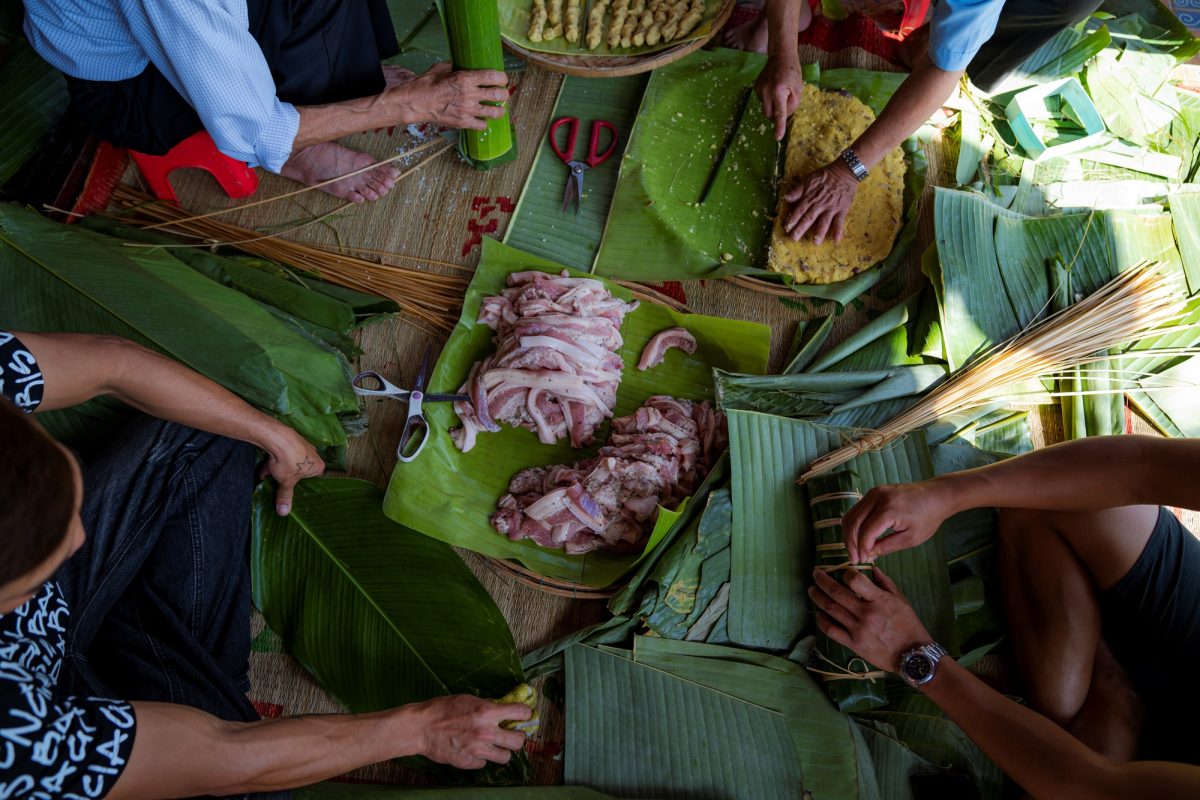

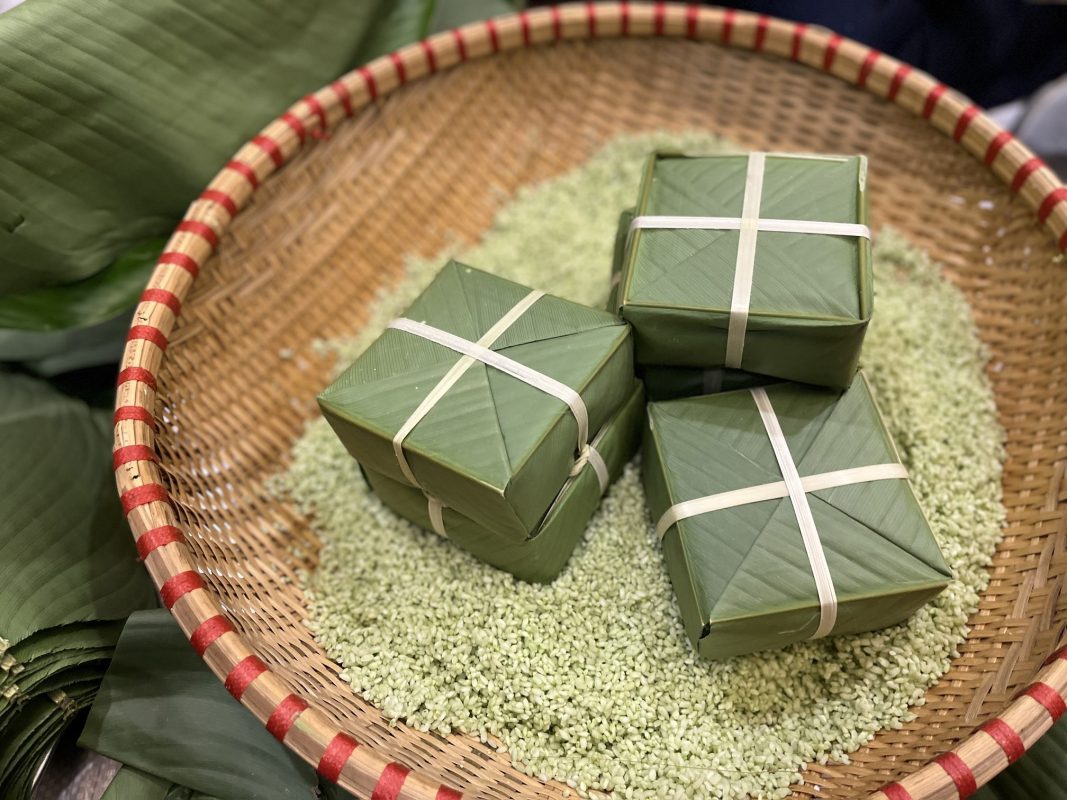
In Northern Vietnam, “bánh chưng” has been passed down through generations, closely linked to the legend of Lang Lieu (“Lang Liêu”) respectfully presenting the cake to the Hùng King (“Vua Hùng”) as a symbol of the Earth. Northern-style “bánh chưng” has a rich, savory flavor, with fatty pork and mung beans blending perfectly with fragrant sticky rice.
In the bustling, lively atmosphere of the year’s end, family members gather to wash dong leaves (“lá dong”), rinse rice, and slice meat. The most skillful hands are chosen for the most important task: carefully wrapping each square cake in fresh green dong leaves.

The aroma of newly harvested sticky rice blends with the fragrance of mung beans, fatty pork, and dong leaves, mingling with the smoky scent of the fire drifting through the cool winter air. On the morning of the first day of the Vietnamese Lunar New Year, the finished cakes are respectfully placed on the ancestral altar – a heartfelt offering of gratitude to heaven, earth, and ancestors, along with wishes for peace and prosperity in the year ahead.
In this way, “bánh chưng” is not just a dish, but a cherished memory – of hometown, of loved ones, of family.
But the cake is not limited to its familiar green appearance. Another version of the traditional square sticky rice cake is known as “bánh chưng mật”, made for those who enjoy a sweeter taste. It is still wrapped in the same way, with a filling of sticky rice, and fatty pork, but mung beans are mixed with sugarcane molasses for a signature tender sweet flavour.

In addition, people in Northern Vietnam have created many modern variations of “bánh chưng”, such as versions made with Gac fruit, which gives the cake a bright red color and a mildly sweet taste, with brown rice for a healthier option, or mini-sized cakes specially made for children.

In the northernmost region of Vietnam – the majestic rocky plateau of Ha Giang and several mountainous areas in the North – “bánh chưng gù” is both a traditional dish and a distinctive cultural symbol of “Tết”.

The local version here is uniquely shaped like a hump, inspired by the image of a mountain peak or a crouching buffalo. This distinctive form is not merely aesthetic but also symbolizes the rugged landscape and rich cultural heritage of the region.

“Bánh chưng gù” is made from familiar ingredients: sticky rice, mung beans, local pork, and dong leaves. Each step of wrapping the cake carries the maker’s devotion, clearly reflecting the spirit of “skillful hands and diligent craftsmanship” in ethnic culture. People in the highlands say that the taste is like feeling the soul of the land, the warmth of human connection, and the simple, honest nature of mountain folk.

Therefore, it is often prepared during festivals, celebrations and important community events, symbolizing unity, gratitude and preserving cultural heritage.

Unlike the square “bánh chưng” of Northern Vietnam or the humped shape of “bánh chưng gù”, “bánh tét” – a symbolic dish of Lunar New Year cuisine in Central and Southern Vietnam – has a long cylindrical form with a dense and hefty filling.

The main ingredients remain sticky rice, mung beans, and pork, but the preparation method is quite unique. After being thoroughly washed, the sticky rice is mixed with butterfly pea leaves or pandan leaves to create eye-catching colors – purple, green, and red – derived from natural plants such as butterfly pea, pandan, and gac fruit. “Bánh tét” is rich in both flavor and fillings, reflecting the creativity of local people. There are many distinctive varieties, including banana, mung bean, ash-water, butterfly pea, ginseng, and moringa.
In Northern Vietnam, “bánh chưng” is wrapped in dong leaves, while in Central and Southern Vietnam, “bánh tét” is wrapped in banana leaves. During preparation, the cake is tightly rolled in the leaves, securely tied with bamboo strings, and slowly boiled for many hours until fully cooked.

Beyond its delicious taste, “bánh tét” is filled with deep emotional meaning. For people in Central Vietnam, its long cylindrical shape symbolizes completeness, like the endless cycle of heaven and earth. Meanwhile, in Southern Vietnam, the cake is cherished for its simplicity and sincerity, reflecting the open-hearted and easygoing nature of Southern people.
One of the places where this tradition is best preserved is Chuon Village (“Làng Chuồn”) in Hue city. This small ancient village, located beside the Tam Giang Lagoon, has been famous for hundreds of years for its “bánh tét”, once offered to the royal court. What sets this “bánh tét” apart is the careful selection of premium ingredients, especially glutinous rice from the Mekong Delta with its even, plump grains, along with flavorful pork belly marinated with traditional spices.
Another distinctive feature lies in the local banana leaves used for wrapping – thick, durable, and neither too young nor too mature – helping the cakes retain their shape and aroma during cooking. Thanks to this meticulous craftsmanship, Chuon Village’s product has earned a reputation that draws visitors from near and far, especially during the Lunar New Year.

Not only celebrated in Hue (Vietnam), Chuồn Village bánh tét is also widely loved by people in Ho Chi Minh City. Every Lunar New Year, families in Chuon Village become busy preparing thousands of “bánh tét” to fulfill orders from southern customers. Some master craftsmen are even invited to Ho Chi Minh City in the days leading up to Vietnamese Tet, where they spend days carefully wrapping the cakes, only returning to Hue by plane on the last day of the year.

For people in Southern Vietnam, the traditional Tet feast includes more than just “bánh tét”. It is often accompanied by braised pork with eggs, stuffed bitter melon soup, boiled chicken, and a plate of pickled vegetables. Each dish carries a wish for the coming year: bitter melon symbolizes overcoming hardship, braised pork represents family togetherness, and the five-fruit tray of custard apple, coconut, papaya, and mango expresses hopes for abundance and prosperity.
No matter which region we come from, when “bánh chưng” & “bánh tét” appear on the traditional New Year’s feast, they mark precious moments of reunion – preserving cherished memories of family and beloved hometowns.
This Tết, Silk Path Hotels & Resorts warmly invites you and your family to immerse yourselves in a poetic atmosphere while discovering the unique flavors and cultural beauty of “Tết” across Vietnam. A journey is worth more than a thousand gifts – in Hanoi, Sapa, and Hue, Silk Path awaits you.